
Every app has them — users who browse but never buy, lurk but never like, open but rarely act. These passive users aren’t lost causes. In fact, they’re one of the biggest untapped opportunities in mobile growth.
This is where Nudge Theory comes in. Originally rooted in behavioral science, Nudge Theory is the practice of influencing decision-making through subtle cues rather than pressure. It’s already been used to change how people save money, eat healthier, and reduce energy use. And now, it’s quietly transforming how smart product teams increase mobile app engagement.
This blog explores how light-touch incentives, embedded rewards, and well-timed nudges can turn passive app users into active, valuable participants without disrupting their experience or flow.
Who Are Passive Users and Why Should You Care?
Passive users aren’t inactive. They’re present, just not participating. They open your app, browse a few screens, hover near key actions, and then bounce. They’re not bouncing entirely, but they’re also not converting, engaging deeply, or contributing to your revenue goals.
This group includes:
- Lurkers: They consume content but never interact.
- Browsers: They explore products or features but don’t commit.
- Delayed actors: They return often but postpone decisions or actions.
Why does this group matter? Because they’re already in the door. Passive users often make up a large share of your total base, and they’ve taken key early steps: downloading, opening, and sometimes even returning. They’re much closer to activation than a cold audience.
But time is limited. In the U.S., 48% of users uninstall an app within 30 days of downloading it. If you’re not nudging passive users toward meaningful engagement early, you risk losing them before they ever convert.
What Is The Nudge Theory and Why Does It Work?
The Nudge Theory comes from behavioral economics, and at its core, it’s simple: people are more likely to take action when prompted by subtle, well‑timed cues — not pressure.
Coined by Richard Thaler and Cass Sunstein, the theory shows that small changes in how choices are presented can meaningfully influence behavior. Think: placing healthier food at eye level, or reminding you to save for retirement just before payday. The key? It doesn’t restrict choice — it guides it.
In digital products, nudges are everywhere:
- A softly glowing “complete your profile” prompt
- A pre‑filled field in a sign‑up form
- A progress bar that’s just 80% full
- A reward offer triggered after a few idle sessions
These nudges aren’t forceful or disruptive. But they work because they meet the user at just the right moment, with just enough incentive to influence action.
Research backs this up. For example, a study on online learners found that using targeted nudges alongside analytics data “was successful in increasing the levels of engagement in online courses.”
In short, when placed thoughtfully, nudges can shift user behavior without interrupting user flow, making them a powerful tool for activating passive users in apps.
How to Turn Passive Users Into Active Ones
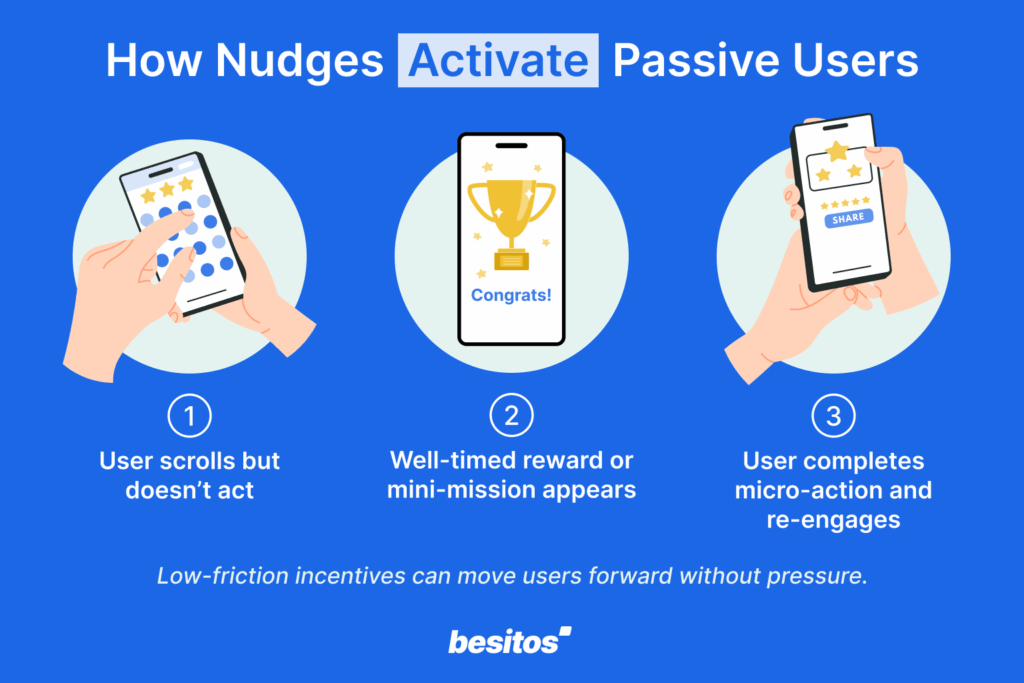
Many re-engagement strategies rely on pushing users, which could make them feel forced. Think notifications, pop-ups, countdowns, etc. But for passive users — AKA the ones quietly hovering — these tactics often backfire. They feel intrusive, poorly timed, or even just irrelevant.
What works better is light-touch engagement built around embedded incentives and low-friction actions.
These strategies can include:
- Just-in-time rewards: Trigger small offers after key “almost” moments, like lingering on a product, returning after a few days, or scrolling without tapping.
- Optional micro-missions: Let users opt into mini goals with small rewards. No pressure, just a gentle path toward deeper interaction.
- Time-independent milestones: Instead of daily streaks, use “every three sessions” or “after 10 screens” to reward consistency without urgency.
The magic is in meeting users where they are and nudging them forward — without disrupting their journey.
Why Embedded Rewards Work Better for Passive Users
Embedded rewards are designed to feel native, appearing within the app flow and triggered by soft signals like repeated visits, partial progress, or return behavior. For passive users, this is a game-changer.
Instead of asking users to do more, these rewards highlight value in what they’re already doing: opening the app, exploring, or coming back after a break. They turn small actions into visible momentum, and that’s often all a passive user needs to move forward.
Here’s what makes them so effective:
- Contextual: Tied to actual behavior, not assumptions
- Low-friction: No extra logins or redirects
- User-driven: They feel like an invitation, not a demand
With platforms like KashKick, embedded rewards show up naturally at key moments, like when a user completes a task, revisits a feature, or edges closer to a milestone. These small wins compound into deeper engagement.
Engaging Passive Users (Without Pushing Too Hard)
Not all rewards need to be loud. In fact, the most effective ones often feel like gentle encouragement rather than bribery or pressure. For passive users, the key is designing incentives that meet them just before they drop off, without breaking their experience.
Here’s how to go about it:

1. Identify Low-Commitment Behaviors
Look for patterns like returning to the same screen, tapping without converting, or opening the app multiple times in a week. These are signs of intent, even if the user isn’t ready to commit
Use case: A user opens your app 3 times in 5 days but hasn’t taken action.
Prompt: “You’re so close to a reward — complete one more action to earn!”
2. Reward Progress, Not Just Outcomes
Don’t wait for full conversions. Give rewards for “in-progress” milestones: 50% of a tutorial, visiting three features, or trying something new.
Use case: User completes half of a setup flow.
Prompt: “Halfway there — finish setting up and get a bonus!”
3. Keep Rewards Optional and Embedded
Place rewards inside the experience, not above it. Avoid overlays or popups. Nudges should feel like part of the design, not interruptions.
Use case: Instead of pushing a bonus, embed it in a card or banner within the user’s next logical step.
4. Use Dynamic Triggers Based on Behavior
Avoid static rules. Tie incentives to real usage patterns, such as returning after dormancy, completing 3+ screens, or pausing too long on a task.
Use case: A user reopens the app after 5 days.
Prompt: “Welcome back! Here’s a reward to pick up where you left off.”
Activate More Users With Besitos-Backed Nudges
Passive users aren’t lost, they’re just waiting for the right moment to act. And the right moment doesn’t have to mean pressure. With embedded rewards and behavior-based nudges, you can shift quiet interest into meaningful action without disrupting user flow.
Besitos makes it easy to design engagement systems that meet users where they are.
Whether you’re looking to add milestone-based incentives, increase mobile app engagement, or reduce silent churn, we can help you turn passive patterns into performance.
Contact us today to learn more about how you can build something more rewarding for your users.